The 10-Minute Reset That Starts Every Work Session
Most productivity advice focuses on what happens during work — time blocks, apps, techniques. Less gets said about the moment right before, which is usually where the resistance actually lives. If sitting down to work feels like a small fight every time, the fix often isn’t discipline. It’s a ritual that removes the decision-making right when you have the least energy for it.
7/13/2026
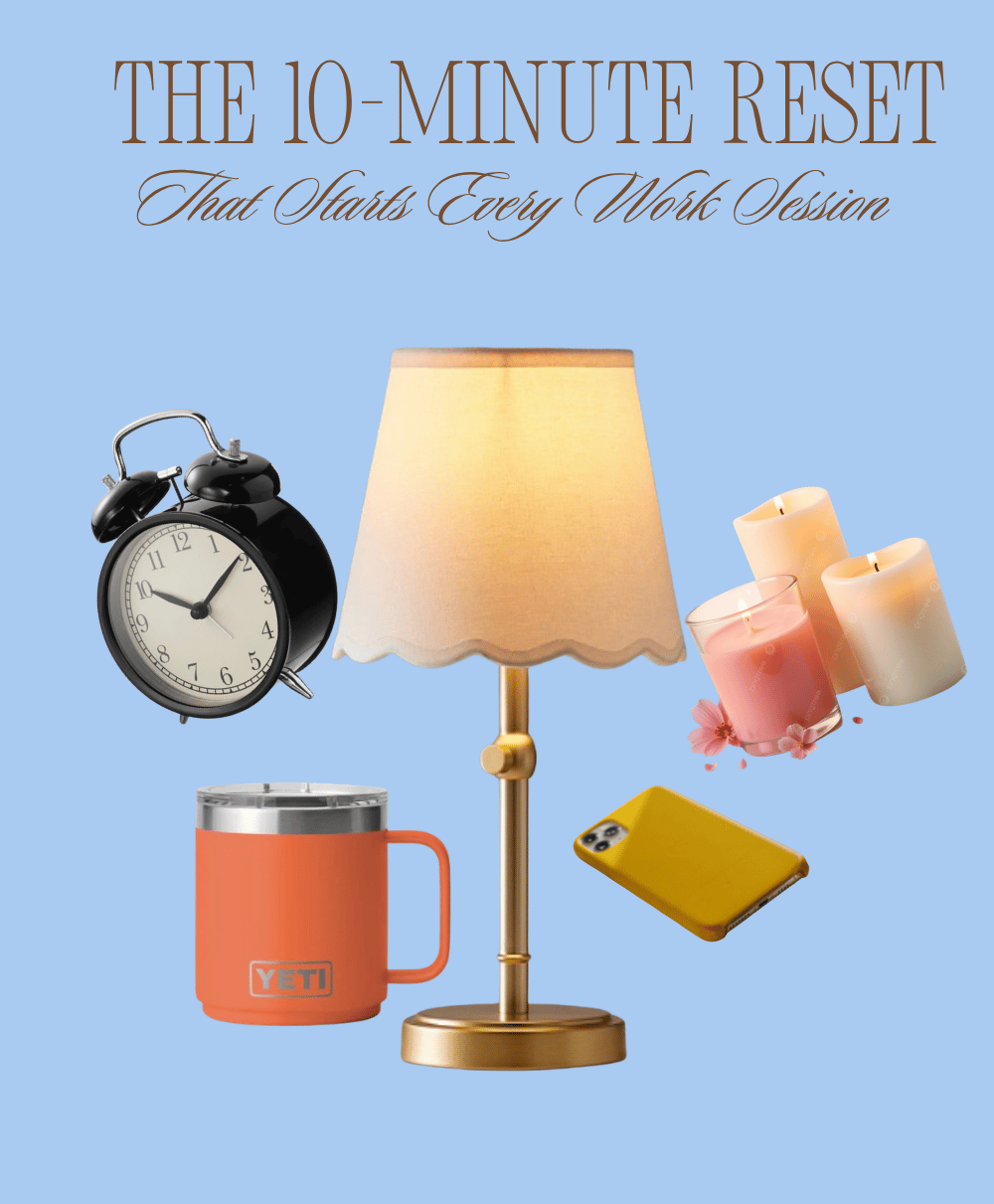
Most productivity advice focuses on what happens during work — time blocks, apps, techniques. Less gets said about the moment right before, which is usually where the resistance actually lives. If sitting down to work feels like a small fight every time, the fix often isn’t discipline. It’s a ritual that removes the decision-making right when you have the least energy for it.
Why this works
Willpower is highest at the start of a task and drops the longer you deliberate. A short, repeatable startup sequence means you’re never deciding how to begin — you’re just doing the same five things you always do, and work starts almost by accident.
The ritual
1. Clear the surface (60 seconds). Not a deep clean — just move anything that isn’t for this session off the desk. A cluttered surface reads as unfinished business before you’ve started anything.
2. Water, then phone away (30 seconds). Fill a glass or top off your mug. Put your phone somewhere that isn’t the desk — a drawer, another room, face-down across the space. This isn’t about willpower, it’s about removing the easiest possible exit.
3. Write down the one thing (2 minutes). Not a to-do list — one sentence: “By the end of this session, I will have ___.” If you can’t finish that sentence, that’s useful information; it means the real first task is deciding what you’re actually doing.
4. Set a visible timer (30 seconds). Doesn’t matter if it’s 25 minutes or 90 — the point is that starting has an end point attached, which makes it easier to begin something that feels big.
5. One sensory cue (1 minute). The same playlist, the same candle, the same lamp turned on. Pick one thing you only do during focused work, so your brain starts associating that cue with the work itself, not the mood you happened to be in that day.
Why it’s short on purpose
A ritual that takes 30 minutes becomes another thing to procrastinate on. Ten minutes is short enough to do even on the days you don’t want to work — and those are exactly the days it matters most.
Making it yours
The five steps above are a starting structure, not a rulebook. Swap the candle for a specific song, the water for tea, the timer for a playlist length instead of a clock. The ritual only works if it’s consistent — so pick versions of each step you’ll actually keep doing, not the ones that sound best.