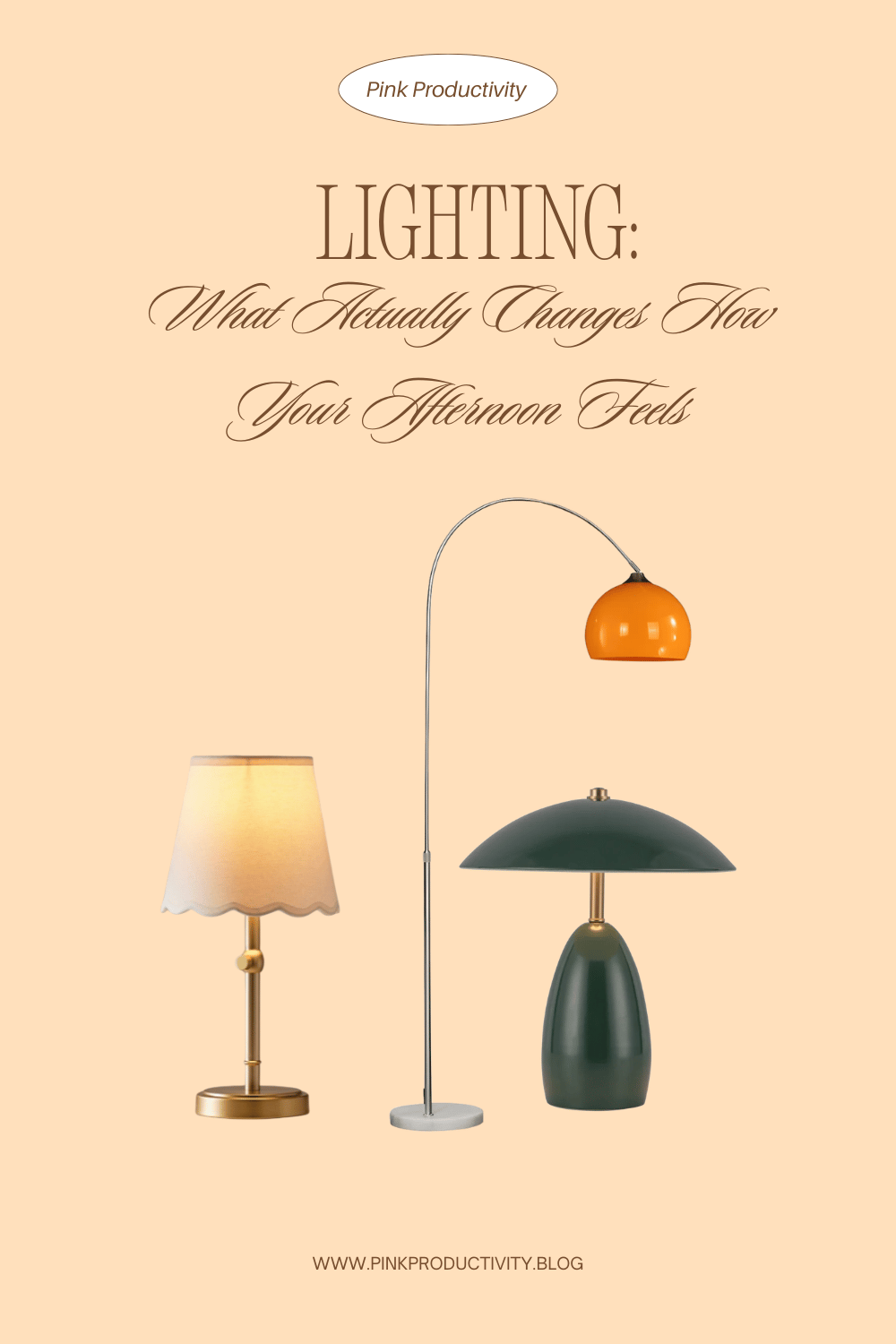
Lighting: What Actually Changes How Your Afternoon Feels
Lighting gets treated as a design afterthought, but it’s closer to a productivity lever than most of what’s on a typical “focus tips” list. The wrong lighting doesn’t just look bad in photos — it’s why 3pm at your desk feels heavier than 10am, even when the actual work hasn’t changed.
7/17/2026
Lighting gets treated as a design afterthought, but it’s closer to a productivity lever than most of what’s on a typical “focus tips” list. The wrong lighting doesn’t just look bad in photos — it’s why 3pm at your desk feels heavier than 10am, even when the actual work hasn’t changed.
The problem most setups have
A single overhead light, or worse, just your monitor’s glow. Both create the same issue: no contrast in the room, which reads to your brain as “nothing has changed in hours,” even during a genuinely long stretch of focused work. Flat, unchanging light flattens your sense of time passing — which sounds abstract until you notice you’ve been in the same lighting condition since 9am and it’s now 4pm and you feel foggy for no clear reason.
What to actually change
Add a second light source that isn’t overhead. A desk lamp, a floor lamp, anything at eye level or below. The goal is a room with more than one light source, so there’s shadow and depth instead of flat sameness.
Get one light with adjustable color temperature.
Cool white (around 5000K) in the morning reads as alert and task-focused. Warmer light (2700–3000K) in the late afternoon signals wind-down without you having to consciously decide to relax. If you only upgrade one bulb, make it adjustable rather than fixed.
Point light at what you’re looking at, not just the room in general.
Ambient light fills a space; task light illuminates the thing your eyes are actually working on. Both matter, but people usually only have the first. Deal with screen glare before anything else. If natural light hits your monitor directly at certain times of day, no amount of added lighting fixes the eye strain from glare. Reposition the desk or add a blind before buying any lights at all.
A simple way to test if your lighting is the problem
Notice the next time you feel foggy or unfocused at your desk for no obvious reason. Look up and check: has the light in the room changed at all in the last three hours? If the answer is no — same brightness, same color, same everything since you sat down — that flatness is a real, physical variable, not just tiredness. Change one light, even just switching on a lamp you’d been ignoring, and see if it shifts anything.
What not to overthink
You don’t need a full smart-lighting setup with schedules and apps. Two light sources — one overhead or ambient, one closer and adjustable — covers almost everyone’s actual need. Anything more elaborate is a hobby, not a requirement.